PNG to AVIF
Replace heavy PNGs on your website with tiny AVIF files, with transparency intact.
PNG to AVIF for the lightest possible images
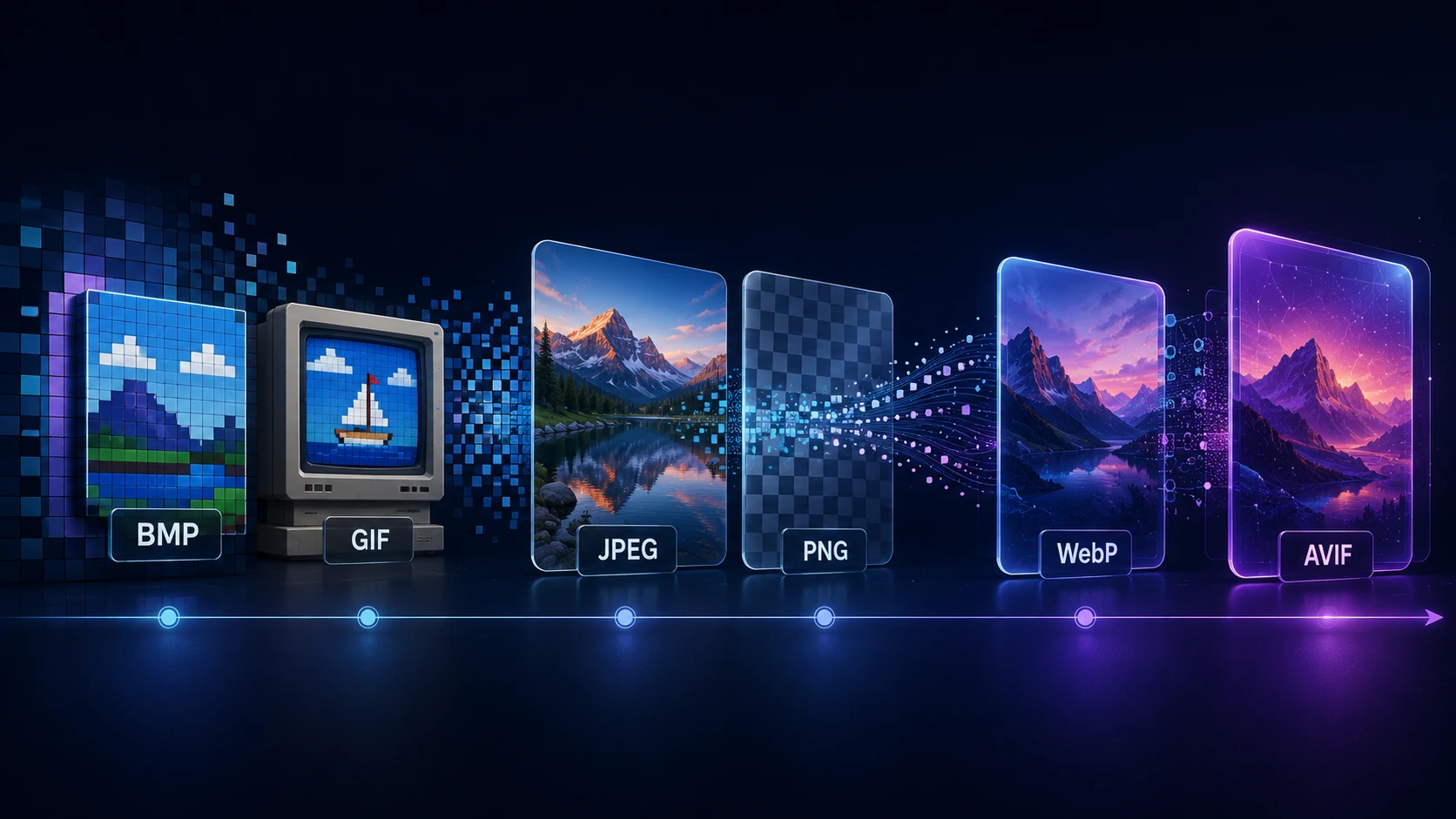
PNG files are often the single biggest drag on a page, particularly large banners and product cut-outs with transparent backgrounds. Until recently, JPG couldn't help because it has no transparency. This PNG to AVIF converter gives you a modern option: small files with the alpha channel intact.
A 3 MB transparent product shot can become a few hundred kilobytes, with no difference most visitors would notice. That's a real gain for page speed, especially on mobile.
How to convert PNG to AVIF
The encoder loads in your browser the first time it's needed.
- 1
Add PNG images
Bring in logos, cut-outs, illustrations or photos saved as PNG. Batches of up to 20 are supported.
- 2
Set a quality level
For sharp logos and text try 75 to 85. Photos usually look fine from about 60 upward.
- 3
Encode to AVIF
Press Convert to AVIF, and give it a little time. AVIF encoding is slower than other formats, but transparent areas are preserved.
- 4
Check the savings
See the new sizes on the result cards, compare the look, and download your AVIF files.
What suits AVIF, and what doesn't
| Image | AVIF result |
|---|---|
| Product cut-out or photo with transparency | Huge savings; an ideal use |
| Illustration with soft gradients | Excellent, and no banding at decent quality |
| Screenshot containing small text | Good at high quality; check the text closely |
| Tiny icon with flat colors | Little or no saving; keep the PNG or use SVG |
| Pixel art | Not suitable; lossy encoding blurs hard pixels |
Rolling it out on a website
- Size images before encoding. Resize Image brings them to their display size, so you aren't storing pixels that never appear.
- Offer a fallback if your audience needs one. The picture element lets a browser choose AVIF or fall back to WEBP or PNG. PNG to WEBP makes the fallback.
- Test on a real device. Open the page on a phone, especially if images have very fine edges.
- Keep the PNG master. Future edits should always start from the lossless copy.
Free, private and local
Nothing is uploaded, so unreleased designs stay on your device. There's no account or watermark. If you ever need a PNG back from an AVIF, AVIF to PNG has you covered, though details lost at low quality won't return.
More Tools
Every tool is free, private and runs in seconds.
Image Tools
48 Compress Image JPEG · PNG · WEBP · GIF · BMP · TIFF · AVIF · HEIC Resize Image Exact px or % Blur Image Gaussian & motion
Convert to JPG
JPGConvert to PNG
PNGConvert to WEBP
WEBPConvert to AVIF
AVIFConvert to TIFF
TIFFConvert to GIF
GIFFavicon / ICO
PDF Tools
12 Compress PDF Shrink for email & web Merge PDF Combine multiple files Image to PDF Images → single PDF PDF to Image Extract as PNG/JPG PDF to PowerPoint Pages → PPTX slides JPG to PDF Photos → PDF pages Word to PDF DOCX → PDF Excel to PDF XLSX → PDF table HTML to PDF Web page file → PDF PDF to JPG Pages → JPEG PDF to Word Extract text to DOCX PDF to Excel Tables → XLSX
Frequently asked questions
Yes. AVIF has a full alpha channel, so a logo or cut-out keeps its transparent background and soft edges.
For photos saved as PNG, savings of 80 to 95% are common. For flat graphics the gap is smaller, and a simple logo may not shrink much at all, since PNG already handles those well.
No. This encoder is lossy, and it's controlled by the quality slider. Fine details can soften at low settings, so keep your PNG as the master copy.
All current major browsers do, including Safari 16 and later. For older browsers, you can use the picture element with a PNG or WEBP fallback.
AVIF generally makes smaller files, while WEBP encodes faster and works in more software. If you're not sure, test both on a few of your images and compare.
AVIF's compression does a lot of analysis, and it's all happening on your device. Large images take longer, especially on phones.
No. The encoder runs locally in your browser.
Blog
Guides and tips from the blog
Short, practical articles to get more out of ImgTask and your image or PDF workflow.