AVIF to JPG
AVIF files are small but not widely supported yet. Change them to JPG so they open, print and upload without errors.
AVIF to JPG converter for images that won't open
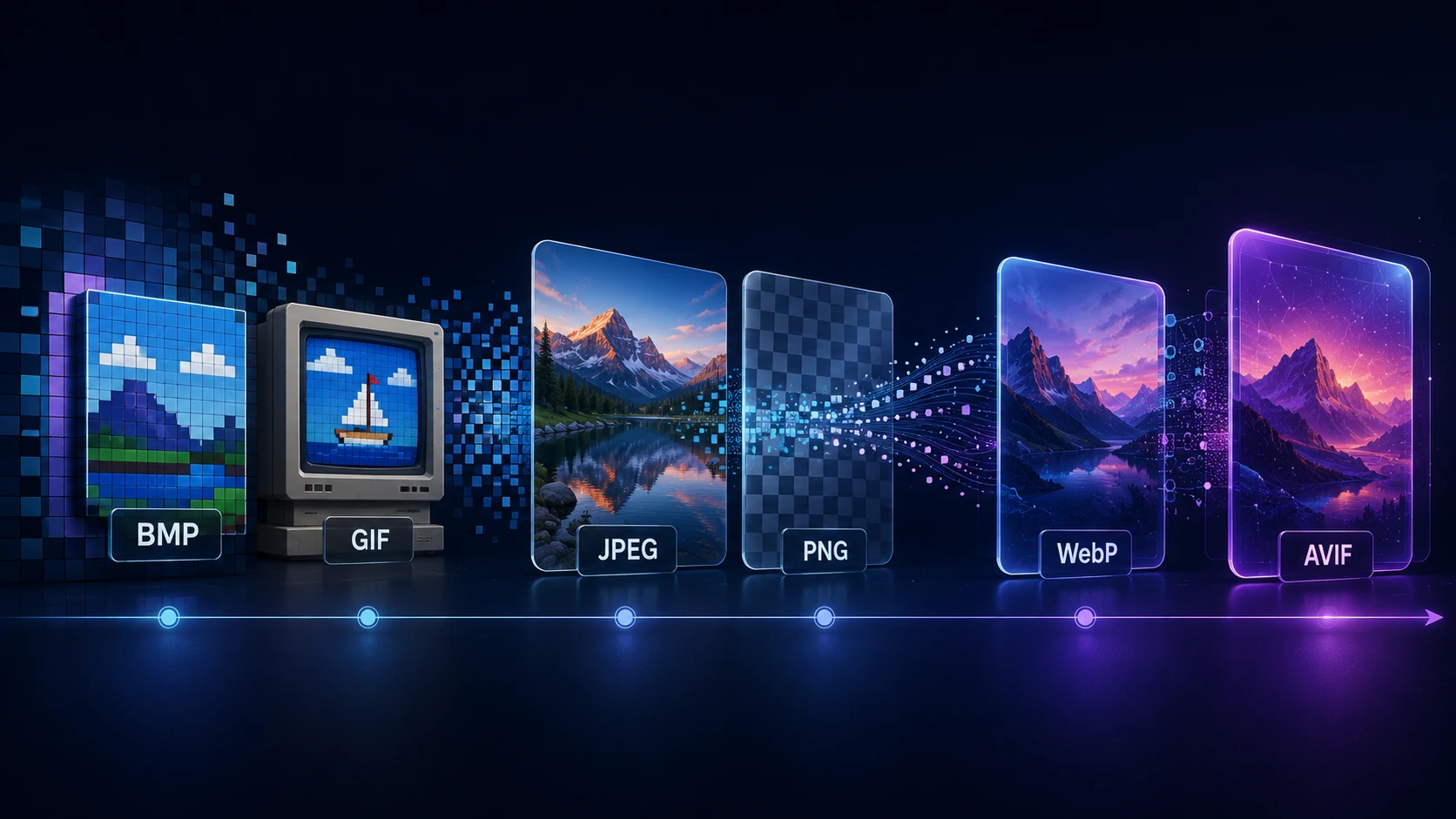
You've saved a picture from a website and ended up with an .avif file that your photo viewer, editing software or a form refuses to touch. That's becoming common, because AVIF gives websites very small images but support outside the browser is still catching up.
This AVIF to JPG converter fixes that in seconds. It turns the AVIF into a standard JPG, the most widely supported image format there is, right in your browser and with no software to install.
How to convert AVIF to JPG
Four quick steps, and you can do a whole batch at the same time.
- 1
Bring in your AVIF files
Drop one or several .avif pictures on the upload box, or tap it to browse your folders.
- 2
Dial in quality
AVIF is very efficient, so start at 90. The JPG will be bigger than the AVIF either way, and lowering the slider helps keep it reasonable.
- 3
Hit Convert to JPG
Your browser reads the AVIF and writes a JPG. A transparent area, if there is one, turns white.
- 4
Grab the downloads
Take each JPG individually or pull the entire batch down in one ZIP.
Where AVIF images come from
AVIF comes from the same group behind the AV1 video codec, and it's built for the web. You're most likely to run into it in these places:
- Images saved from websites, especially shopping, news and media sites that use automatic image optimization.
- Downloads from image services that offer AVIF as a space-saving option.
- Exports from editors that support it, such as GIMP.
AVIF vs JPG in practice
| AVIF | JPG | |
|---|---|---|
| File size at similar quality | Very small | About 2–3 times larger |
| Support | Current browsers; patchy elsewhere | Everything, for decades |
| Transparency | Yes | No |
| HDR and wide color | Yes | Standard color only |
| Encoding speed | Slow | Fast |
AVIF is the better format for serving images on a website. JPG is the better format for handing a picture to someone else or to another program.
Picking a quality for your JPG
Quality 90 is a safe choice when the picture may be printed or edited. For email, messaging and upload forms, 75 to 80 keeps the file much lighter with no visible change. If you need to hit a precise limit such as 100 KB, finish with Compress Image and enter that target.
Keep the AVIF original if you have the storage. It's a smaller, better-quality master than the JPG you're making from it.
If the AVIF won't convert
- Update your browser. This page uses your browser's own AVIF decoder, and older versions don't have one.
- Check that it's really an AVIF. A file that was renamed from another format, or only partly downloaded, can fail. Save it again from the source.
- Very large images need memory. A huge AVIF may fail on an older phone. Try a laptop if that happens.
Other formats you may want instead
- AVIF to PNG for logos and graphics where transparency matters.
- AVIF to WEBP if you need a small web format with wider support.
- JPG to AVIF when you want to go the other way and shrink a photo for your own site.
Free and private
There's no sign-up and no watermark, and you can convert as many files as you like. Because the conversion happens on your own device, the images aren't uploaded anywhere.
More Tools
Every tool is free, private and runs in seconds.
Image Tools
48 Compress Image JPEG · PNG · WEBP · GIF · BMP · TIFF · AVIF · HEIC Resize Image Exact px or % Blur Image Gaussian & motion
Convert to JPG
JPGConvert to PNG
PNGConvert to WEBP
WEBPConvert to AVIF
AVIFConvert to TIFF
TIFFConvert to GIF
GIFFavicon / ICO
PDF Tools
12 Compress PDF Shrink for email & web Merge PDF Combine multiple files Image to PDF Images → single PDF PDF to Image Extract as PNG/JPG PDF to PowerPoint Pages → PPTX slides JPG to PDF Photos → PDF pages Word to PDF DOCX → PDF Excel to PDF XLSX → PDF table HTML to PDF Web page file → PDF PDF to JPG Pages → JPEG PDF to Word Extract text to DOCX PDF to Excel Tables → XLSX
Frequently asked questions
AVIF is an image format based on the AV1 video codec. It delivers high quality at very small sizes, often half of a comparable JPG, which is why a growing number of websites and image services use it.
Drop the AVIF on this page and press Convert to JPG. Everything is done by your browser, and the JPG downloads a moment later.
AVIF is still fairly new. Older versions of Windows, Photoshop, Office and many mobile apps can't read it, even though current browsers can. Converting to JPG gets around that.
AVIF compresses far more efficiently than JPG. Expect the JPG to be two to three times the size at similar visual quality. That's normal, and lowering the quality slider to around 75 helps.
Not reliably, because the site picks the format based on what your browser accepts. It's simplest to convert after saving. Some sites offer a download button that gives you the original image, which is worth trying first.
A little, because JPG is lossy. At quality 85 to 90 you won't see it in normal viewing. HDR AVIF images are converted to standard color, so very bright highlights can look a bit flatter.
JPG can't store transparency, so those areas become white. Use AVIF to PNG if you want to keep the transparent background.
The conversion relies on your browser's built-in AVIF support. Current versions of Chrome, Edge, Firefox and Safari 16 or later all work. If you see an error, update your browser and try again.
No. Decoding and encoding both happen on your device, so your files stay private.
Blog
Guides and tips from the blog
Short, practical articles to get more out of ImgTask and your image or PDF workflow.