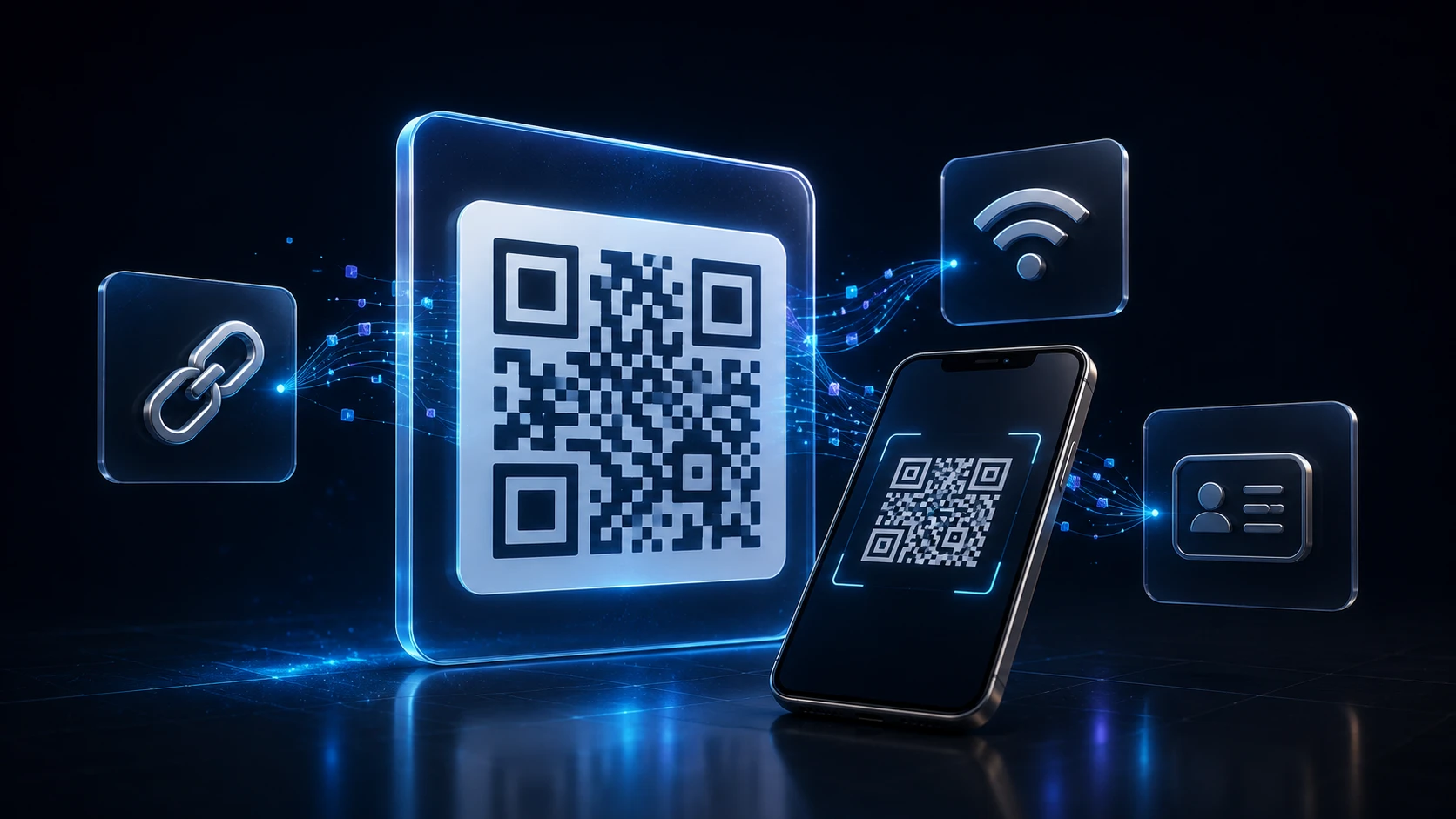
How to Create a QR Code: A Complete Guide for URLs, WiFi and More
Dinitha Ransidu Aug 27, 2026 17 min
Edit & optimize
Convert to JPG
Convert to PNG
Convert to WEBP
Convert to AVIF
Convert to TIFF
Convert to GIF
BMP
Edit & optimize
Convert to JPG
Convert to PNG
Convert to WEBP
Convert to AVIF
Convert to TIFF
Convert to GIF
BMP
Optimize & combine
Convert to PDF
Turn iPhone HEIC photos into JPEG files that open on Windows, Android, and most upload forms.
Many iPhones save photos as HEIC. JPEG is easier to open across email clients, browsers, and web forms. The browser converts the HEIC file locally and creates a JPG file that can be opened by applications with broader JPEG support.
Use HEIC to JPG when sending photos to people or services that do not open HEIC files.
Related tools: HEIC to PNG · HEIC to WEBP · Compress Image
Since iOS 11, iPhones often save pictures as HEIC because the format stores photos more compactly than JPEG. The catch is compatibility: plenty of Windows apps, Android phones, email clients, and upload forms will not open a .heic file.
The browser converts the HEIC file locally and creates a JPG file that can be opened by applications with broader JPEG support. Nothing is uploaded to ImgTask's server for this conversion.
On iPhone, you can upload from Safari — tap the upload area and pick the photo from your library. To stop new photos saving as HEIC, open Settings, then Camera, then Formats, and choose Most Compatible. Photos already in your library still need converting.
On Windows, File Explorer often needs a Store codec before it will even show a thumbnail. This tool skips that: the browser generates a preview of your HEIC so you can confirm the right photo, then writes a JPEG locally.
Standard EXIF, GPS, and similar metadata are stripped during re-encoding. Orientation is applied to the pixels first so the download stays upright. Apple-specific extras cannot survive the trip — Live Photo motion, depth maps, and HDR gain maps have no equivalent in a plain JPEG.
Upload limit: 200 MB per image, up to 20 files at once. Images above about 100 megapixels may fail in the browser. Conversion re-encodes pixels and strips EXIF, GPS, XMP, ICC, and DPI metadata; orientation is applied visually first. Transparent pixels are flattened onto white.
Limitations: Conversion is lossy relative to the HEIC source depending on quality. Live Photos, depth data, and other Apple-specific extras are not stored in JPEG. Metadata is stripped after orientation is applied.
Privacy: Your image is processed locally in your browser and is not uploaded to ImgTask's server. Image files never leave your device. No account is needed and results carry no watermark.
Image Tools
Compress Image
JPEG · PNG · WEBP · GIF · BMP · TIFF · AVIF · HEIC
Resize Image
Exact px or %
Blur Image
Gaussian & motion
Convert to JPG
Convert to PNG
Convert to WEBP
Convert to AVIF
Convert to TIFF
Convert to GIF
Favicon / ICO
PDF Tools
Compress PDF
Shrink for email & web
Merge PDF
Combine multiple files
Image to PDF
Images → single PDF
PDF to Image
Extract as PNG/JPG
PDF to PowerPoint
Pages → PPTX slides
JPG to PDF
Photos → PDF pages
Word to PDF
DOCX → PDF
Excel to PDF
XLSX → PDF table
HTML to PDF
Web page file → PDF
PDF to JPG
Pages → JPEG
PDF to Word
Extract text to DOCX
PDF to Excel
Tables → XLSX
Blog
Short, practical articles to get more out of ImgTask and your image or PDF workflow.
Dinitha Ransidu Aug 27, 2026 17 min
Dinitha Ransidu Aug 15, 2026 12 min
Uploading
Processing…
Processing failed