How to Create a QR Code: A Complete Guide for URLs, WiFi and More
Dinitha Ransidu Aug 27, 2026 17 min
Edit & optimize
Convert to JPG
Convert to PNG
Convert to WEBP
Convert to AVIF
Convert to TIFF
Convert to GIF
BMP
Edit & optimize
Convert to JPG
Convert to PNG
Convert to WEBP
Convert to AVIF
Convert to TIFF
Convert to GIF
BMP
Optimize & combine
Convert to PDF
Reduza o tamanho de arquivos de imagem em segundos. Comprima fotos JPEG, PNG, WEBP e HEIC com um controle de qualidade ou tamanho alvo em KB. Sem necessidade de conta.
This tool takes an image you upload and re-encodes it so the file uses fewer bytes. Compressing an image is different from resizing it: resizing changes the width and height in pixels, while compression reduces image file size and usually leaves the dimensions untouched. A photo can stay 4000 × 3000 pixels and still lose most of its weight, or barely shrink at all if it was already optimized.
Use it when a JPEG is too big for a website upload form, an email attachment limit, a social platform, or a product listing. If you also need different dimensions, run the image resizer first and compress afterwards.
File size comes from three things: how much detail the encoder keeps, how many pixels the image has, and which format stores those pixels. You can pull any of those levers, and combining them gives the biggest reduction.
The quickest way to reduce image file size is to compress at a lower quality. Dropping a photo from 100% to 80% often removes more than half the bytes with no obvious difference on screen. This is what the quality slider above does.
A 6000-pixel-wide photo displayed in a 1200-pixel column is carrying five times more data than it needs. Cutting the width in half removes roughly three quarters of the pixels. Use the resize image tool to set exact dimensions or a percentage, then compress the result.
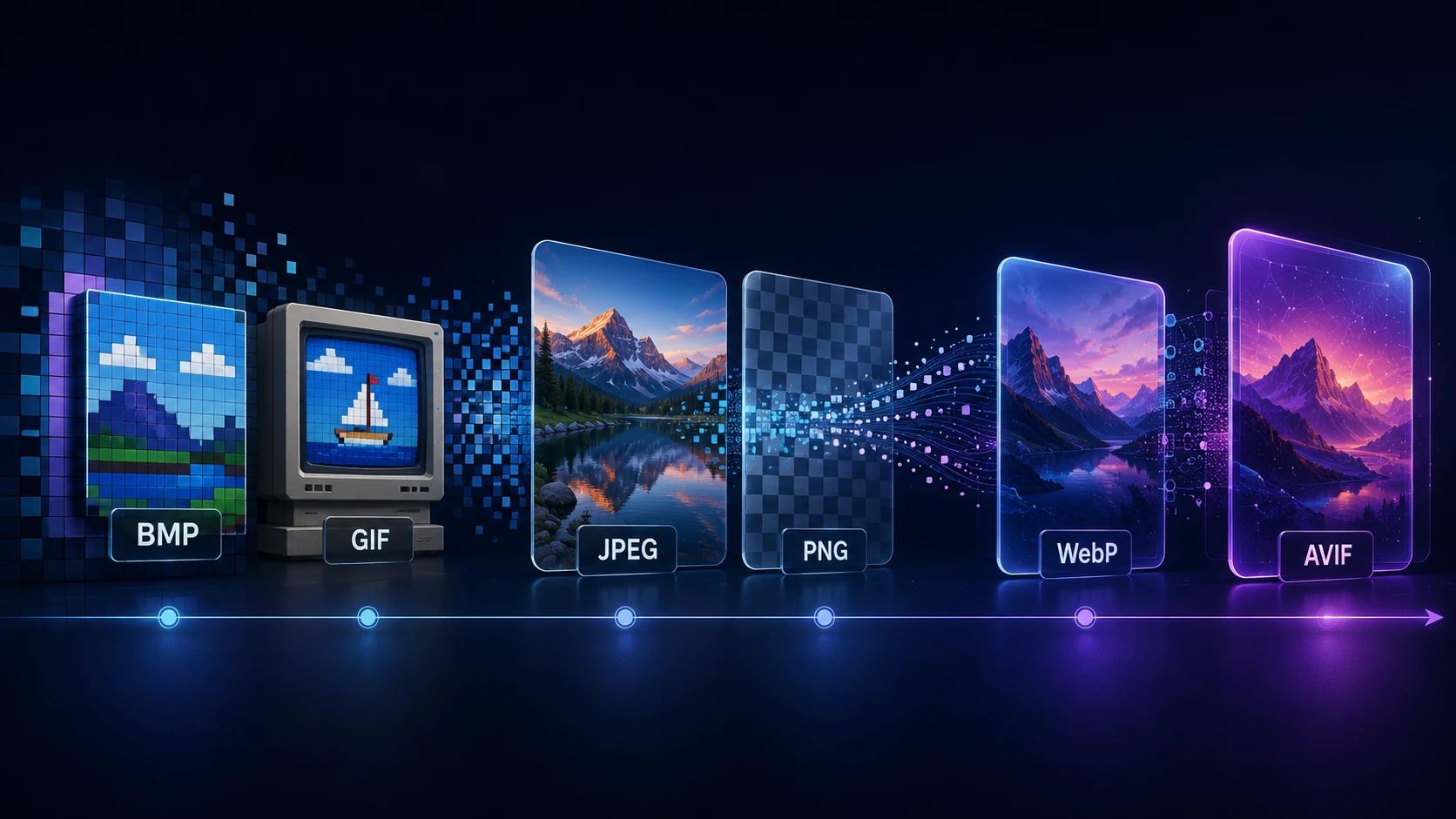
Format matters as much as quality. A screenshot saved as PNG can shrink dramatically as WEBP, and a photo stored as PNG is often much smaller as JPEG. Keep PNG only when you need transparency or pixel-exact graphics.
JPEG is built for photographs and responds well to compression. Camera and phone JPEGs are usually saved at a very high quality setting, so re-encoding at 75–85% typically cuts the file size in half while the photo still looks the same at normal viewing size.
PNG is lossless. This compressor runs OxiPNG in your browser on the original PNG bytes — it does not re-encode through Canvas. Flat graphics, logos, and screenshots compress well. Photographs saved as PNG usually get much smaller by converting them instead.
WEBP and AVIF are already efficient modern formats, so expect smaller gains than with an untouched JPEG. They are still worth compressing when you are chasing page speed and every kilobyte in the payload counts.
HEIC uploads are compressed and saved as JPEG, which makes them viewable everywhere. If you only need the format change without extra compression, use the dedicated HEIC to JPG converter.
| Quality | What you get | Good for |
|---|---|---|
| 85–90% | Modest size reduction, detail kept | Portfolios, print-adjacent work, photo archives |
| 75–85% | Large saving, hard to tell apart from the original | Website images, blog posts, product photos |
| 60–75% | Small file, slight softness in fine texture | Email attachments, forms with upload limits |
| 10–60% | Smallest file, visible blocking and banding | Thumbnails, previews, strict size caps |
These are starting points, not rules. After compressing you get a before and after slider, so you can raise or lower the quality and re-apply until the balance looks right.
Accepted uploads: JPEG, PNG, WEBP, GIF, BMP, TIFF, AVIF, HEIC. Maximum size: 200 MB per image.
Limitations: Compression can reduce visual quality. HEIC inputs are saved as JPEG. Transparent PNGs converted through JPEG-oriented paths lose transparency. Savings depend on the original file.
Privacy: Your image is processed locally in your browser and is not uploaded to ImgTask's server. Image files never leave your device. No account is needed and results carry no watermark.
Image Tools
Convert to JPG
Convert to PNG
Convert to WEBP
Convert to AVIF
Convert to TIFF
Convert to GIF
Favicon / ICO
PDF Tools
Compress PDF
Shrink for email & web
Merge PDF
Combine multiple files
Image to PDF
Images → single PDF
PDF to Image
Extract as PNG/JPG
PDF to PowerPoint
Pages → PPTX slides
JPG to PDF
Photos → PDF pages
Word to PDF
DOCX → PDF
Excel to PDF
XLSX → PDF table
HTML to PDF
Web page file → PDF
PDF to JPG
Pages → JPEG
PDF to Word
Extract text to DOCX
PDF to Excel
Tables → XLSX
Blog
Short, practical articles to get more out of ImgTask and your image or PDF workflow.
Dinitha Ransidu Aug 27, 2026 17 min
Dinitha Ransidu Aug 15, 2026 12 min
Uploading
Processing…
Processing failed